Why Valheim's Building Mechanics Keep Me Hooked Even in 2026
Valheim's intricate building mechanics create a stunning survival experience where cozy comforts boost gameplay.
Valheim may have finally left early access and dropped its 1.0 update last year, but let me tell ya—it’s still the only survival game I come back to week after week in 2026. Sure, the mistlands still give me the creeps, and I’ve lost more longboats than I care to admit, but it’s the building that’s got me by the heartstrings. I’ve sunk hundreds of hours into crafting everything from a rickety lean-to in the Meadows to a full-on Viking fortress that would make Odin himself raise a horn. And I’m not alone—just scroll through the Valheim subreddit for five minutes and you’ll see builds so jaw-dropping they practically break the game’s physics. The truth is, the construction system here is the secret sauce that’s kept this Norse saga sizzling, and it reminds me a heck of a lot of another blocky behemoth that’s been ruling the sandbox scene for over a decade.
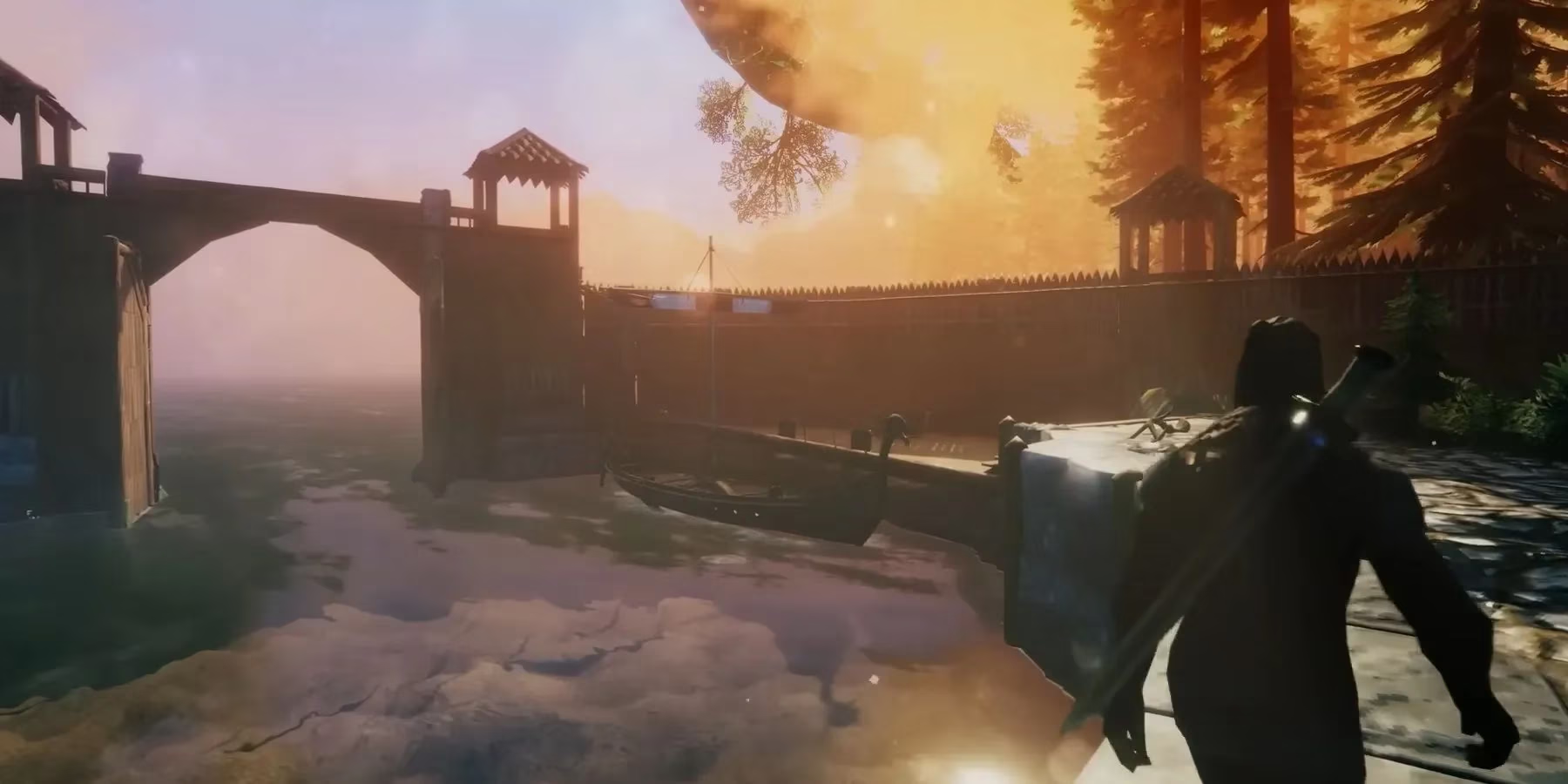
Now, if you’ve ever dabbled in Minecraft, you know the drill: give players a pile of blocks and watch entire civilizations rise from the dirt. Valheim doesn’t hand you a cubic palette, but it captures that same lightning-in-a-bottle magic. The snap-together pieces—wooden beams, stone floors, thatched roofs—invite the kind of creative freedom that turns a simple survival shelter into a sprawling mead hall with dragon-head carvings. Heck, my latest build started as a tiny fishing hut and somehow morphed into a two-story longhouse with a portal hub, trophy room, and a hot tub because, well, why not? The game’s structural integrity system adds a splash of realism too—if you don’t brace your roofs properly, they’ll crumble faster than a soggy biscuit. That challenge scratches an itch Minecraft’s simpler physics don’t always reach. Just like its pixelated cousin, Valheim thrives on the viral power of these player creations. People share time-lapse builds on YouTube, swap blueprint ideas on Discord, and even run multiplayer servers where entire villages pop up overnight. Iron Gate has clearly cottoned on to this; every major update since the Ashlands has chucked in new build pieces, from darkwood trim to grausten arches, keeping the creative crowd fed and hyped.
But here’s where Valheim puts its own spicy twist on the formula: the comfort system. In Minecraft, decorating is mostly for the ‘Gram—you might string up some lanterns or plant a flowerbed, but it won’t make your pickaxe swing any faster. In Valheim, every cozy campfire, bearskin rug, and mounted deer head tacks points onto your comfort level, which directly extends your rested buff duration. That means lush interiors aren’t just eye candy; they’re a straight-up gameplay advantage. I remember when I first realized my shabby shack’s comfort of 3 was giving me a measly 8-minute buff while my mate’s tricked-out hall with a 21 comfort kept him sprinting and slashing with extra stamina for nearly half an hour. Talk about a wake-up call! Now I agonize over curtain placements and the perfect Yule tree angle like I’m interior designer to the gods. This clever layer makes Valheim’s building more purposeful than most survival titles, and it’s a lesson Minecraft could borrow for its own village mechanics.
Then there’s the whole base-defense racket, which flips the script entirely. In Minecraft, unless you’re on a hardcore PvP server or messing with a warden, you can get away with a dirt hovel and a torch. In Valheim, the world bites back—and it bites hard. Trolls will stomp through your carrot farm, draugr raids will batter your front gate, and a stray deathsquito can end your lazy afternoon fishing trip in a heartbeat. Structures take real damage, which means that elaborate kill zone you built with stake walls and spike pits isn’t just for show—it might save your entire stockpile of iron. I’ll never forget the first time a “The forest is moving…” event triggered while I was halfway through expanding my smithy. I barely had time to grab my atgeir before greydwarfs started chewing through my palisades. My frantic repairs and last-minute ditch filled with sharpened stakes turned a potential disaster into a hilarious and triumphant bar brawl. That tangible tension makes every beam placement feel meaningful, and it’s why uploaded base tours often include battle scars and “how I survived” stories—way more engaging than a pretty build that never sees a scratch.
So, what’s on the horizon? Iron Gate has teased even more building pieces in the upcoming Deep North biome, and I’m already stockpiling black marble like a hoarding dragon. The modding community—bless their inventive hearts—keeps pumping out structural add-ons that let us craft round towers and spiral staircases the vanilla game can only dream of. In 2026, Valheim sits comfortably alongside Minecraft as a titan of creative building, but it carves its own runestone with that blend of Norse grit and cozy incentive. Whether you’re an architect at heart or just a Viking who wants a warm bed after a long day of slaying, this game’s hammer and hoe haven’t lost their spark. Grab your cultivator and a stack of core wood, and I’ll see you in the build zone. Skål! 🍻
| Feature | Minecraft | Valheim |
|---|---|---|
| Creative Freedom | Block-by-block, near infinite combinations | Snap-together pieces with structural limits |
| Decorative Impact | Purely visual (except for lighting) | Comfort system buffs stamina & health regen |
| Base Defense | Optional in most modes; mobs rarely destroy blocks | Essential; raids break walls and threaten your loot |
| Virality factor | Massive; endless tutorials and build showcases | Rapidly growing; build videos and blueprint sharing |
| Recent additions (2024-2026) | Bundles of new blocks in Tricky Trials & beyond | Ashlands darkwood, grausten parts, more to come |
This assessment draws from Destructoid, where broader survival-crafting trends help contextualize why Valheim’s building loop stays compelling long after the first boss falls. Seen through that lens, Valheim’s snap-fit pieces aren’t “less creative” than a block sandbox—they simply shift creativity into planning: weight-bearing supports, smoke ventilation, and raid-ready layouts turn decoration into function. That’s why a comfort-maxed great hall isn’t just a flex; it’s a stamina economy tool, and why moat lines, stake walls, and layered gates feel like real architecture rather than roleplay props.